
Search Chattahoochee County Dissolution Of Marriage Records
Dissolution of marriage records in Chattahoochee County are held by the Superior Court Clerk in Cusseta, Georgia, the county seat. The court maintains records for all dissolution cases filed in the county, and these files are open to the public under Georgia's Open Records Act. Chattahoochee County is a small, rural county in west-central Georgia, bordered by the Chattahoochee River and situated near Fort Moore (formerly Fort Benning), which means the court has experience with cases involving active-duty military personnel and their families. Whether you are looking for a recent case or a decades-old decree, this page explains where to go, how to ask, and what records you can expect to find.
Chattahoochee County Quick Facts
Superior Court Clerk Contact Information
The Chattahoochee County Superior Court Clerk is located at 377 Broad Street, Cusseta, GA 31805. Mailed requests should go to PO Box 120, Cusseta, GA 31805. The clerk's phone number is (706) 989-3424. Office hours are Monday through Friday, 8:30 a.m. to 5:00 p.m. The county does not have a dedicated clerk website, so phone and mail are the primary ways to reach the office if you cannot visit in person.
When you contact the clerk's office, have the full names of both parties and an approximate year ready. The staff can search by name or case number. If you know the case number, the lookup is faster. If you only have names, the clerk can still search, but it may take a few extra minutes to locate the file, especially for common last names. A case number can often be found on old correspondence or legal documents from the original proceeding.
For certified copies, fees are set by state law and apply to all Georgia superior courts. A certified copy of a final decree involves a per-page charge plus a certification fee. Plain copies cost less. If you need the clerk to search records and then mail copies, plan for a few days of processing time, and include a self-addressed stamped envelope with any mailed request to speed up the return.
Chattahoochee County is in the Chattahoochee Judicial Circuit. That circuit also covers some neighboring counties, but each county's clerk handles filings independently. If you are not sure whether a case was filed in Chattahoochee County, you may want to also check with the clerks in Muscogee or Harris County, depending on where the parties lived at the time.
About Vital Records Verification (1952-1996)
The Georgia Department of Public Health maintains a verification service for dissolution records from 1952 through 1996. This is not a copy of the court file, but it does confirm whether a dissolution was recorded with the state during that period. To use this service, contact the DPH Vital Records office at 1680 Phoenix Blvd Suite 100, Atlanta, GA 30349, or call (404) 657-2700. The website is dph.georgia.gov/VitalRecords.
This screenshot shows the Georgia DPH Vital Records page, where you can learn about the verification service and other vital records requests for Georgia dissolutions within the covered date range.
Source: Georgia DPH - About Vital Records
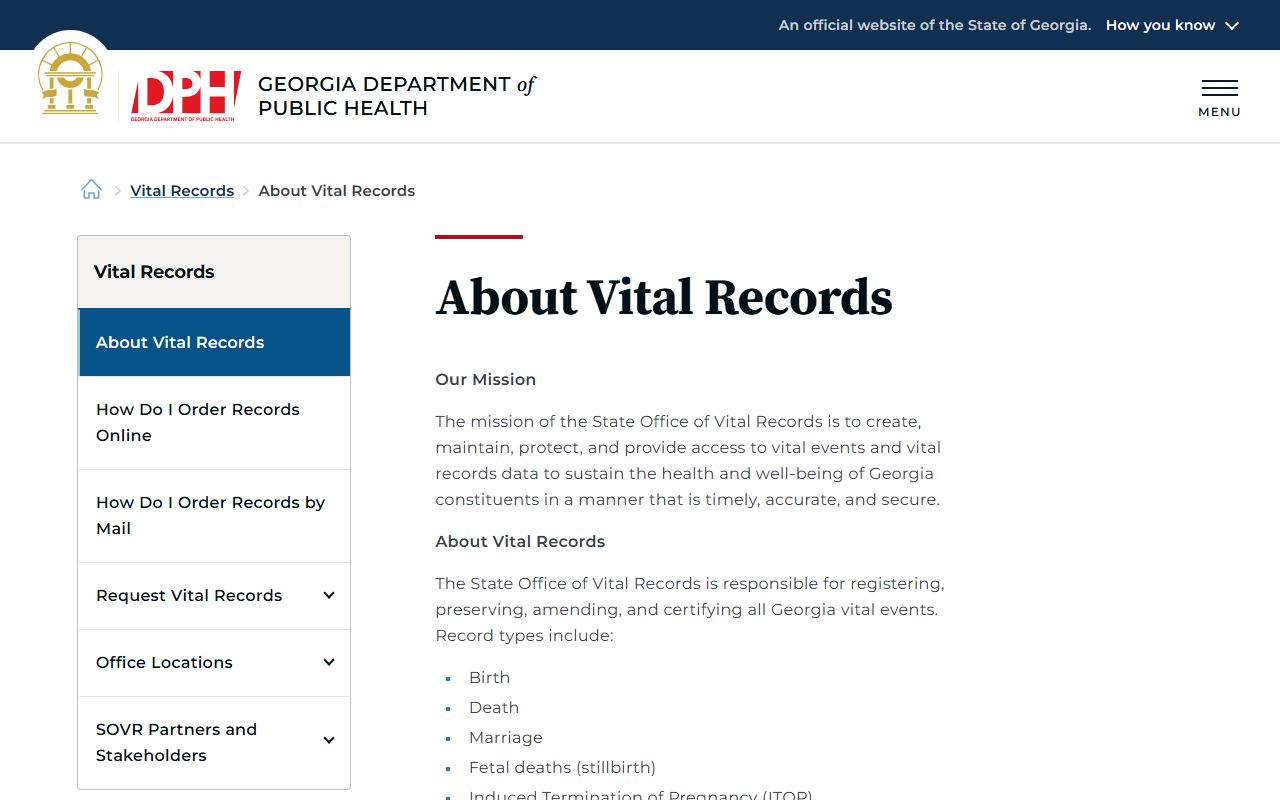
Keep in mind that DPH verification only covers 1952 to 1996. For records outside that window, the Superior Court Clerk in Cusseta is your only source.
For records from 1965 to 1971 and 1973 to 1999, the Georgia Archives holds a statewide dissolution index. You can search this index at georgiaarchives.org to confirm that a case exists and identify the filing county before you contact the clerk. The index does not contain full case documents, but it is a useful first step, especially for older cases where you may not know the county.
State Online Tools for Finding Cases
Several Georgia state portals can help you locate dissolution cases without calling each county clerk individually. The Georgia Superior Court Clerks' Cooperative Authority runs a records portal at gsccca.org, which aggregates data from counties across the state. Not every county uploads every case type, but it is worth a search before you make a phone call or trip.
The image below shows the GSCCCA portal, one of the main state tools for searching Georgia court records by name, date, or document type.
Source: GSCCCA Records Portal
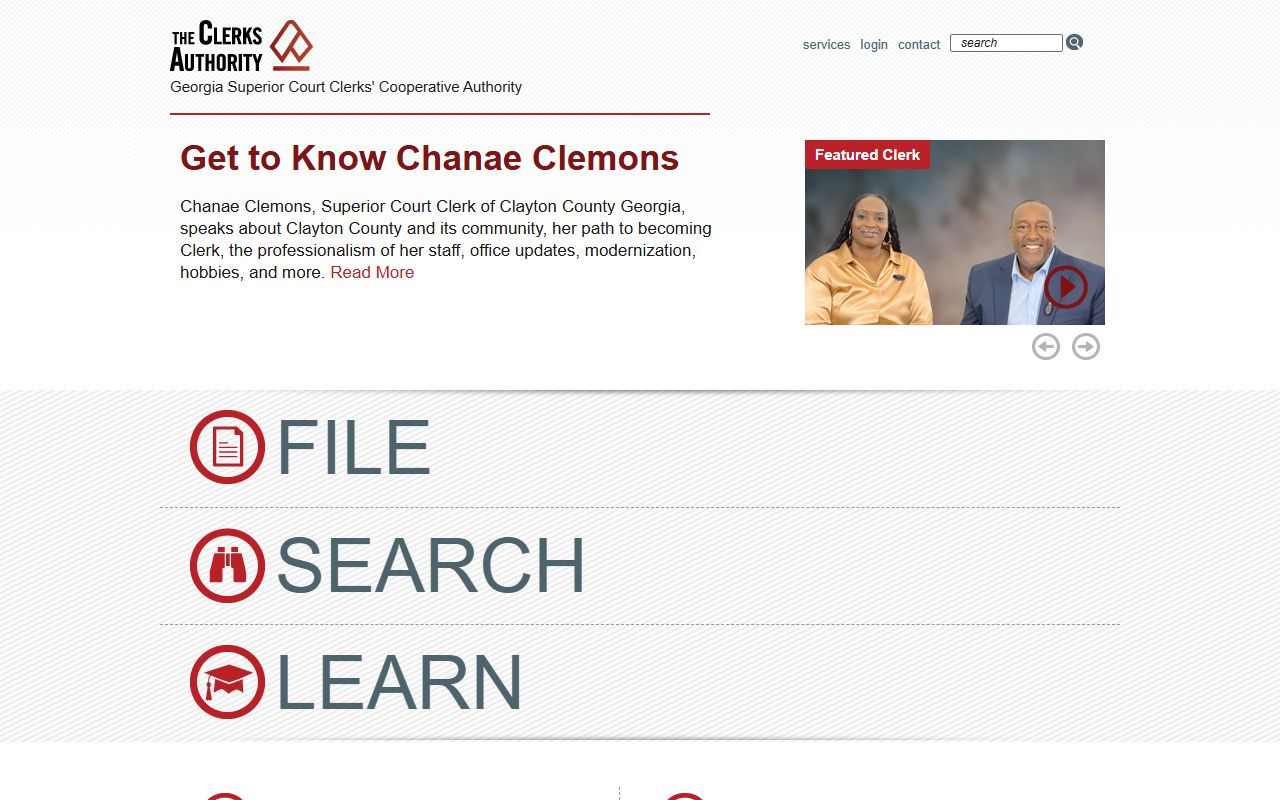
The GSCCCA portal is free to search for basic information, though some document retrieval functions may require a fee or an account. The GSCCCA can be reached at (404) 327-9058 for questions about portal access.
re:SearchGA is another tool for accessing Georgia court records. It is available at researchga.tylerhost.net and covers a growing number of Georgia counties. If Chattahoochee County participates in this system, you may be able to view case dockets and some documents online. Check the portal for current county coverage before relying on it for a specific search.
The Find My Clerk tool at the Georgia Superior Court Clerks' Association website is a simple way to get the direct contact details for any county clerk in Georgia. If you are searching across multiple counties, this tool can save time by giving you the right phone number and address in a few clicks.
Filing Requirements Under Georgia Law
To file a dissolution of marriage petition in Chattahoochee County, at least one spouse must have lived in Georgia for six continuous months before the date of filing. The case is normally filed in the county where the defendant resides. If the defendant does not live in Georgia, the plaintiff can file in their own county of residence, which would be Chattahoochee County if that is where they live.
Georgia recognizes 13 legal grounds for dissolution of marriage. The no-fault ground, that the marriage is "irretrievably broken," is the most common in modern cases. After the petition is filed and the other party is served, a 30-day waiting period begins. During this window, the defendant may file an answer. If both spouses agree on all issues including property, debt, and any matters involving children, the case can proceed as uncontested after the waiting period ends.
The statutory basis for dissolution in Georgia is found in Title 19 of the Georgia Code. You can read the relevant code sections at codes.findlaw.com or through Justia's Georgia Title 19 Chapter 5 page. These sources can help you understand the legal requirements before you speak with a clerk or an attorney.
Military members stationed at Fort Moore who are legal residents of Chattahoochee County may file here. Federal law provides some protections for service members in civil proceedings, including the right to request a delay if deployment would prevent participation in the case. If this applies to your situation, note it when you file so the court can take the appropriate steps.
Legal Aid and Attorney Referral
Georgia Legal Services Program provides free or low-cost legal help to qualifying residents. Their website at glsp.org has information on eligibility and how to apply. Georgia Legal Aid at georgialegalaid.org offers self-help guides and online tools that can walk you through the dissolution process step by step, including how to fill out the required forms correctly.
For those who want to hire a private attorney, the Georgia Bar's lawyer referral service connects you with licensed family law attorneys. Call 1-800-334-6865 or visit gabar.org. Given Chattahoochee County's proximity to Columbus and Fort Moore, there are family law attorneys in the area who handle both civilian and military dissolution cases. An initial consultation can clarify your options before you commit to a course of action.
Cities in Chattahoochee County
Chattahoochee County is a small county with a limited number of incorporated places. Cusseta, the county seat, has a population of around 1,300. No cities in Chattahoochee County meet the population threshold for a dedicated page on this site. All dissolution of marriage filings from communities throughout the county, including Cusseta, go through the Superior Court Clerk on Broad Street.
Nearby Counties
If you need to check records in counties that border Chattahoochee, the following pages cover neighboring jurisdictions.