
Find Dissolution Of Marriage Records in Chattooga County
Chattooga County dissolution of marriage records are held by the Superior Court Clerk in Summerville, Georgia, and are available to the public under the Georgia Open Records Act. The county sits in the northwest corner of Georgia, bordering Alabama and surrounded by the Chattahoochee National Forest. All cases, from simple agreed matters to fully contested proceedings involving property or children, go through the Chattooga County Superior Court. This page covers how to contact the clerk, how to get copies of records, what state tools can help your search, and what the law requires if you are filing a new case in this county.
Chattooga County Quick Facts
Superior Court Clerk in Summerville
The Chattooga County Superior Court Clerk is located at 10035 Commerce Street, Summerville, GA 30747. Mailed requests should be sent to PO Box 159, Summerville, GA 30747. The clerk's office phone is (706) 857-0704. Hours are Monday through Friday, 8:30 a.m. to 5:00 p.m. There is no dedicated county clerk website, so phone and mail are the best options if you cannot visit in person.
When you call or write, provide the full names of both parties and an approximate year the case was filed if you know it. The clerk's staff can search by name or case number. In-person visits allow you to review a file directly and order copies on the spot. Fees for certified copies are set by state statute and are consistent across Georgia superior courts. A plain copy costs less than a certified one, and if you only need to verify that a dissolution occurred, a plain copy is often enough for personal reference.
Chattooga County is in the Lookout Mountain Judicial Circuit. This circuit covers several counties in northwest Georgia, and the same Superior Court handles all major civil matters in the county, including dissolution proceedings. The judge assigned to your case depends on the circuit's schedule, but the clerk's office handles all filings and record requests regardless of which judge was assigned.
If you are mailing a record request, include a check or money order made payable to the Clerk of Superior Court, your return address, and a brief description of what you are looking for. If you are not certain that the case was filed in Chattooga County, it may help to check the state-level resources described below before sending a formal request.
Requesting Vital Record Verifications from Georgia DPH
The Georgia Department of Public Health keeps dissolution records on file for cases from 1952 through 1996. These are not full court files but state-level verifications that a dissolution was recorded. To request a verification, contact the DPH Vital Records office at 1680 Phoenix Blvd Suite 100, Atlanta, GA 30349, call (404) 657-2700, or visit dph.georgia.gov/VitalRecords. For cases outside the 1952 to 1996 window, go directly to the Chattooga County Superior Court Clerk.
The screenshot below is from the Georgia.gov vital records request page, which describes how to request state records including dissolution verifications within the covered date range.
Source: georgia.gov - Request Vital Records
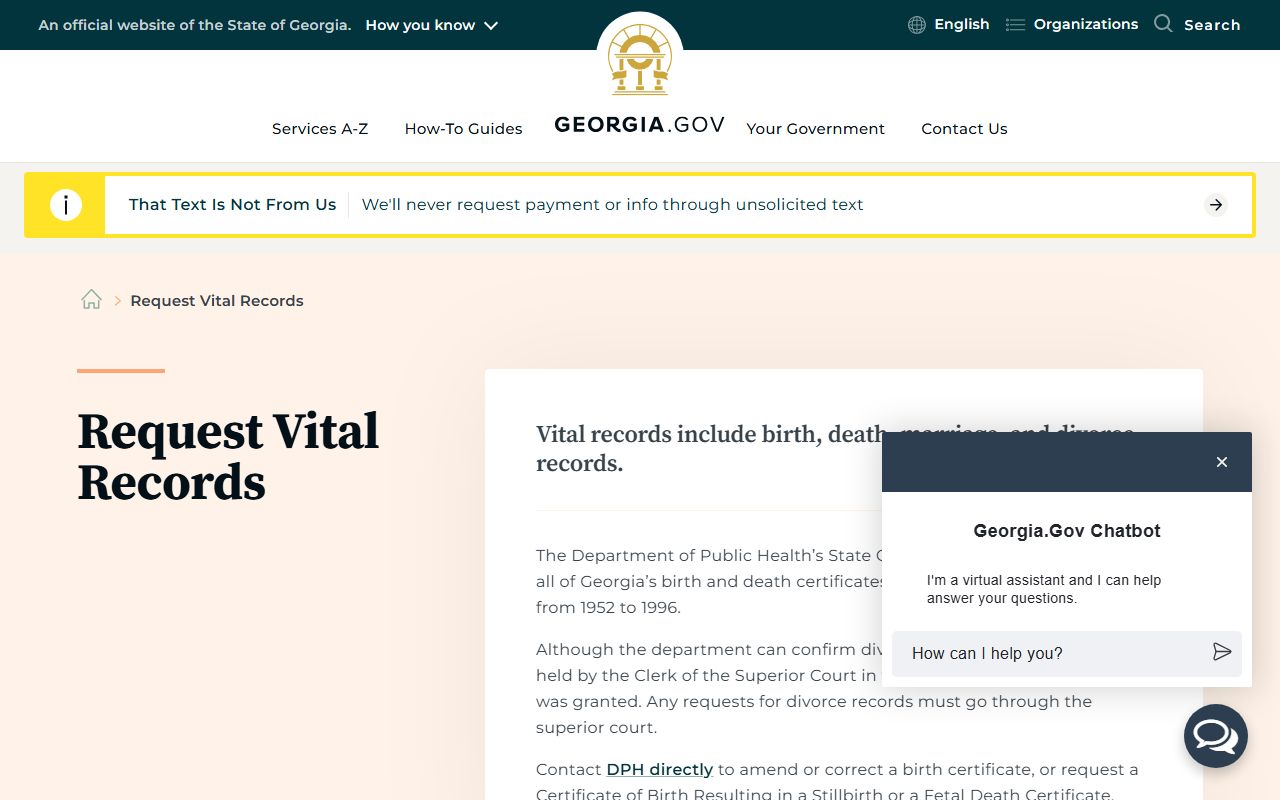
This state portal walks you through the steps to request verifications, including what information you will need to provide and what the process involves for dissolution cases.
Using State Portals to Search for Cases
Georgia provides several statewide tools that can help you find dissolution case records before you contact a county clerk directly. These tools vary in coverage and depth, but they are worth trying as a first step.
PeachCourt is a Georgia state e-filing and case access platform. Some counties allow filings through PeachCourt, and the system may give you access to case dockets and basic case information online. Check whether Chattooga County currently participates before relying on this tool for a specific search. The Georgia Courts website at georgiacourts.gov also has links to court information, filing guides, and resources for each judicial circuit in the state.
This image shows the PeachCourt interface, Georgia's state platform for online case access and e-filing in counties that participate.
Source: PeachCourt
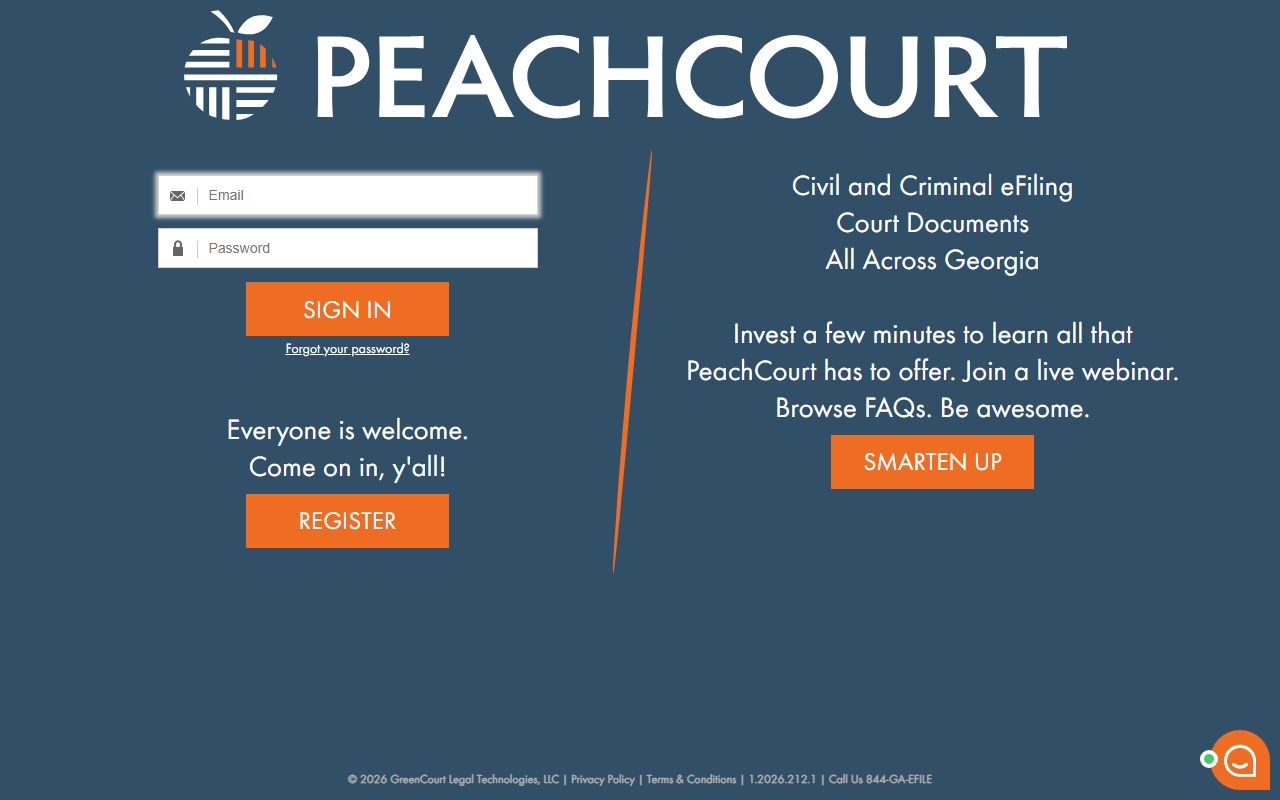
PeachCourt is updated as more counties join the system, so even if Chattooga County was not listed in the past, it is worth checking the current county list on the site.
The Find My Clerk directory at the Georgia Superior Court Clerks' Association website gives you direct contact details for every county clerk in Georgia. This is useful if you are searching records in multiple counties and need to contact several offices. The GSCCCA records portal is another statewide tool that aggregates court data from Georgia's 159 counties, though coverage varies by county and document type.
Filing Requirements and Grounds for Dissolution
To file for dissolution of marriage in Chattooga County, at least one spouse must have been a Georgia resident for six months or more before the petition is filed. This requirement is set by Georgia Code Title 19. You file in the county where the defendant lives. If the defendant has left Georgia, you can file in your own county of residence.
Georgia law lists 13 statutory grounds for dissolution. The most widely used is that the marriage is "irretrievably broken," a no-fault standard that requires no proof of fault or wrongdoing by either spouse. Other grounds include adultery, willful desertion, habitual intoxication, and cruel treatment. Most people choosing to end a marriage in Georgia use the irretrievably broken ground because it is less adversarial and moves through the court more smoothly.
After the petition is served on the other party, the case enters a 30-day waiting period. During this time, the defendant can respond. If both parties reach an agreement on property, debts, and any matters related to children, the case can wrap up quickly after the waiting period ends. If the parties disagree, the case becomes contested and may involve additional hearings, discovery, or mediation before a judge resolves the outstanding issues. You can review the relevant Georgia statutes at codes.findlaw.com or through Justia's Georgia Title 19.
Legal Aid and Attorney Referral Services
Legal help is available for Chattooga County residents who qualify based on income. Georgia Legal Services Program serves rural and lower-income Georgians; their site at glsp.org explains how to apply and what services are offered. Georgia Legal Aid at georgialegalaid.org provides self-help tools and plain-language guides for people who want to handle a dissolution case on their own or with limited legal support.
If you prefer to work with a private attorney, the Georgia Bar lawyer referral service can connect you with a family law attorney in the area. Call 1-800-334-6865 or visit gabar.org. Attorneys in nearby Rome or Dalton regularly handle cases in Chattooga County and can advise you on local court procedures in addition to the state law requirements.
The Georgia Archives at georgiaarchives.org holds a statewide dissolution index covering 1965 to 1971 and 1973 to 1999. This index is a helpful starting point if you are searching for an older case and are not certain it was filed in Chattooga County. Once you confirm the filing county from the index, you can contact the appropriate clerk's office for the full case documents.
Cities in Chattooga County
Chattooga County's largest community is Summerville, the county seat, with a population of around 4,500. No city in Chattooga County meets the threshold for a dedicated records page on this site. Other communities include Lyerly, Menlo, and Trion. All dissolution of marriage cases from across the county are filed through the Superior Court Clerk's office in Summerville.
Nearby Counties
Cases that may have been filed in surrounding jurisdictions can be checked through these neighboring county pages.