
Search Clayton County Dissolution Of Marriage Records
Clayton County dissolution of marriage records are filed with the Superior Court Clerk in Jonesboro, Georgia, the county seat. Clayton County is part of the Atlanta metropolitan area and borders Fulton and DeKalb counties to the north, making it home to a large number of residents who work throughout the metro region. All dissolution cases go through the Superior Court, and the records are public under the Georgia Open Records Act. This page explains how to get copies of records, how to use state tools for online case lookups, what Georgia law requires, and where to find older records through the state archives.
Clayton County Quick Facts
Superior Court Clerk in Jonesboro
The Clayton County Superior Court Clerk is at 9151 Tara Boulevard, Jonesboro, GA 30236. Mail goes to PO Box 2177, Jonesboro, GA 30237. The phone number is (770) 477-3305. Office hours are Monday through Friday, 8:30 a.m. to 5:00 p.m. The county's courts website is claytoncountyga.gov/government/courts/, which provides links to court-related information and forms.
When contacting the clerk's office, have the names of both spouses and an approximate case year ready. The clerk can search by name or case number. In-person visits allow you to review the file and request copies on the spot. Certified copies require a per-page fee plus a certification charge set by Georgia law. Plain copies cost less. For mailed requests, include a check payable to the Clerk of Superior Court, your return address, and a brief description of the case you need. Turnaround time for mailed requests depends on office volume, so plan accordingly if you need the documents by a specific date.
Clayton County is in the Clayton Judicial Circuit. This circuit covers Clayton County alone, which means the Superior Court here focuses exclusively on cases filed in this county. Given Clayton's size and its position in the Atlanta metro, the court handles a substantial volume of dissolution filings each year. The clerk's staff can direct you to the right resources and let you know whether the county uses any online tools for case access.
Online Records Access: GSCCCA and State Tools
Georgia's statewide online resources can help you locate dissolution case information before a courthouse visit. The Georgia Superior Court Clerks' Cooperative Authority at gsccca.org maintains a records portal with data from counties across the state. Coverage varies by county and document type, but the portal is worth checking as a first step. GSCCCA's phone is (404) 327-9058.
The screenshot below shows the GSCCCA records portal, one of the primary state tools for searching Georgia court records by name or document type.
Source: GSCCCA Records Portal
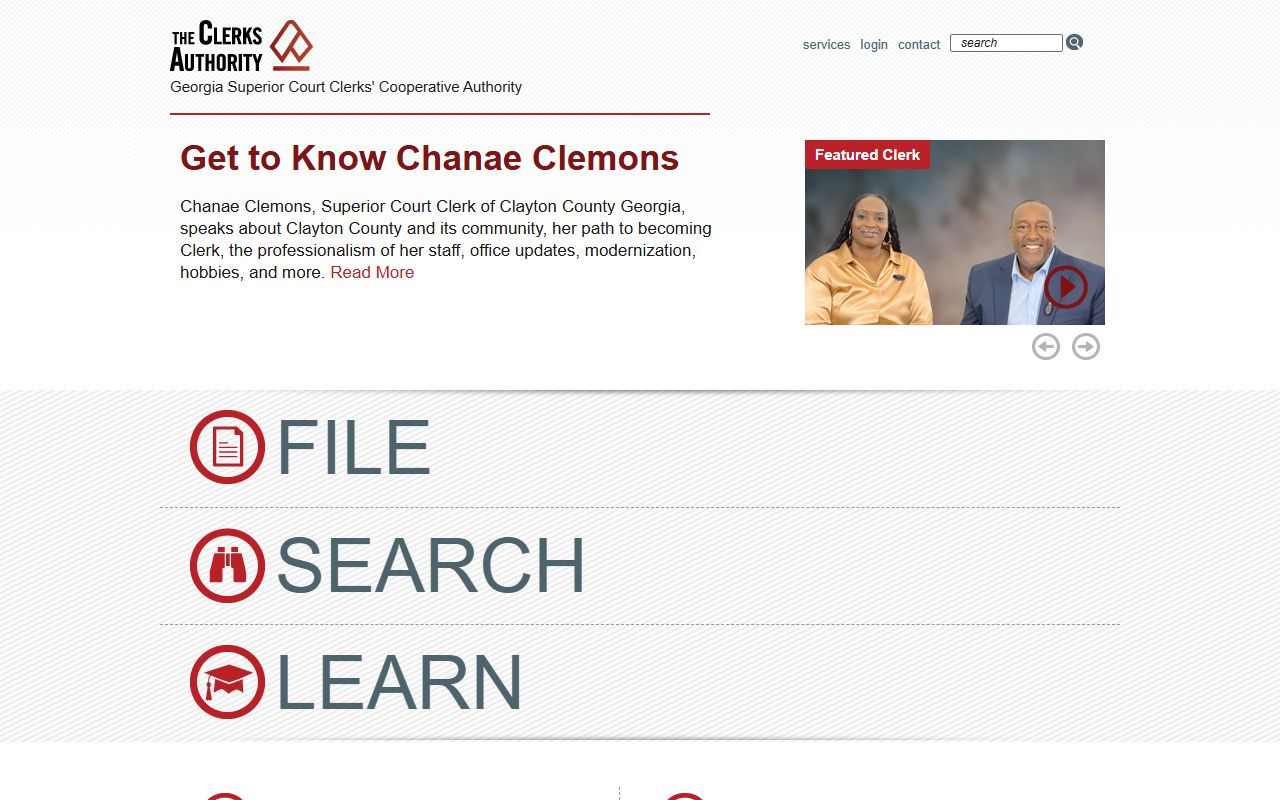
The GSCCCA portal aggregates data from Georgia's 159 counties and provides both free basic searches and paid document retrieval options depending on the type of record you need.
re:SearchGA, available at researchga.tylerhost.net, is another tool for online case access. If Clayton County participates in this system, you can view case dockets and some basic case details without contacting the clerk directly. Check the platform for current county coverage. PeachCourt is also available for counties that accept electronic filings and case access through the state's e-filing platform. The Georgia Courts portal at georgiacourts.gov links to judicial circuit information, clerk contacts, and filing guides for Clayton County and the rest of Georgia.
The image below shows the Georgia statutes page for dissolution grounds under Title 19, where you can read the legal basis for dissolution filings in Clayton County.
Source: FindLaw Georgia Code Section 19-5-3
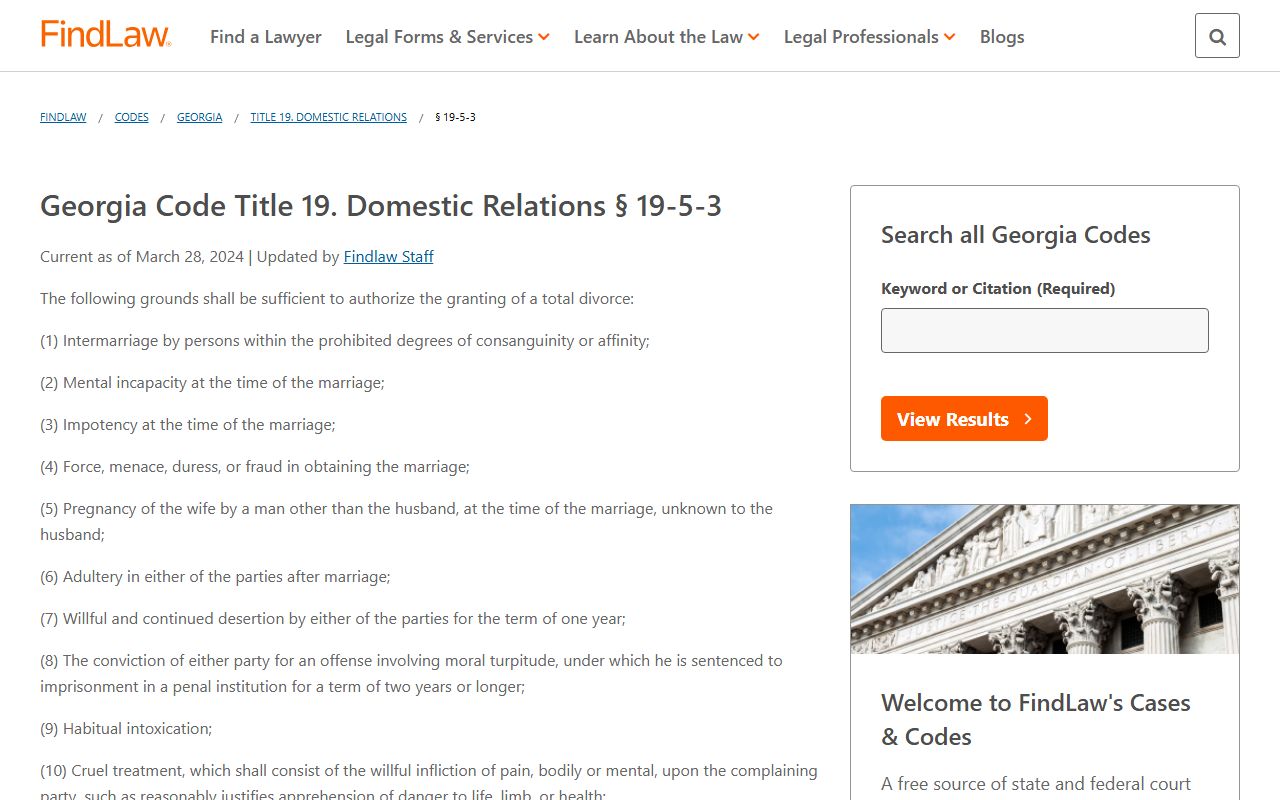
Reading the statute before you file or make a records request gives you a clearer picture of what the law requires and what the court will look at when reviewing your case.
Residency Rules and the Filing Process
Georgia requires at least one spouse to have lived in the state for six months before a dissolution petition can be filed. In Clayton County, you file at the Superior Court Clerk's office on Tara Boulevard. The case goes to the county where the defendant lives. If the defendant has left Georgia, the plaintiff can file in their own county, which would be Clayton County if that is where they reside.
Georgia law provides 13 grounds for dissolution, with the most common being that the marriage is "irretrievably broken." This no-fault ground does not require proof of wrongdoing by either spouse, and it is used in the large majority of cases in Clayton County and across Georgia. After you file and the defendant is served, there is a mandatory 30-day waiting period before the court can enter a final decree. If both parties agree on all issues including property division, debts, and any matters involving children, the case can close soon after the waiting period ends.
Contested cases take longer. When spouses disagree on one or more issues, the court may order mediation or schedule hearings. Clayton County's Superior Court is experienced with the full range of contested and uncontested dissolution proceedings. The clerk's office can give you general information about the process, but for legal advice on how to handle your specific situation, an attorney or legal aid resource is the right place to go. Statutes are available at codes.findlaw.com and Justia's Georgia Title 19.
Historical Records: Georgia Archives and DPH
For older dissolution records, the Georgia Archives at georgiaarchives.org holds a statewide dissolution index covering 1965 to 1971 and 1973 to 1999. This index can confirm that a dissolution was filed and identify the county, which is the starting point for getting the full case documents. For Clayton County cases found in the index, contact the clerk at 9151 Tara Boulevard for the original file.
The Georgia Department of Public Health offers a verification service for dissolution records from 1952 through 1996. This confirms state-level registration of the dissolution but is not a copy of the court file. Reach DPH Vital Records at 1680 Phoenix Blvd Suite 100, Atlanta, GA 30349, by phone at (404) 657-2700, or at dph.georgia.gov/VitalRecords. For any record outside the 1952 to 1996 window, go directly to the Superior Court Clerk in Jonesboro.
Legal Aid and Attorneys in Clayton County
Georgia Legal Services Program at glsp.org provides free or low-cost legal help to qualifying residents, including those in the Clayton County area. Georgia Legal Aid at georgialegalaid.org offers self-help guides, online tools, and plain-language information about the dissolution process. These are good starting points if you are handling a simple uncontested case or need help understanding what forms to file.
For private representation, the Georgia Bar referral service can connect you with a family law attorney who handles Clayton County cases. Call 1-800-334-6865 or visit gabar.org. The Jonesboro area has a number of family law attorneys, and given Clayton County's position in the metro area, many Atlanta-area attorneys also practice in this court. An initial consultation is worth pursuing if your case involves children, significant assets, or any dispute that could become contested.
Cities in Clayton County
Clayton County includes several communities in the Atlanta metro area. Jonesboro is the county seat, with a population of approximately 4,000. No city in Clayton County meets the population threshold for a dedicated page on this site. Other communities in the county include Forest Park, Lake City, Lovejoy, Morrow, Riverdale, and Rex. All dissolution of marriage cases from across the county are handled through the Superior Court Clerk on Tara Boulevard in Jonesboro.
Nearby Counties
If a dissolution case may have been filed in a neighboring county, these pages cover adjacent jurisdictions.