
Long County Dissolution Of Marriage Records
Long County dissolution of marriage records are held by the Superior Court Clerk at the Long County Courthouse in Ludowici, Georgia. All petitions, decrees, and related case papers filed in Long County become public records once entered by the court. Long County is a small coastal plain county between Hinesville and the Altamaha River region, and its clerk's office processes dissolution cases under the same state rules that apply across all Georgia Superior Courts. This page explains how to find and request records, what to do if you need to file a case here, and where to get help.
Long County Quick Facts
Superior Court Clerk - How to Reach the Office
The Superior Court Clerk in Long County keeps all dissolution of marriage records. The courthouse is at 1 North Main Street in Ludowici. The mailing address for requests is PO Box 7, Ludowici, GA 31316. You can call the clerk at (912) 545-2123. Office hours are Monday through Friday, 8:30 a.m. to 5:00 p.m. The clerk does not run a public-facing case search website, so in-person visits and phone calls are the main ways to access records.
When you visit, bring a valid photo ID. Staff can search by party name or by case number. They can confirm what documents are on file and give you a quote for copy fees. Certified copies, which are typically required for legal purposes, cost more than plain copies. If you only need to confirm a case exists, a plain copy may be enough. Call before visiting if your request involves older records, so staff can locate the file in advance.
For mailed requests, write to the PO Box listed above. Include the full names of both parties, an estimated year of filing, and any case number you have. Send a check or money order made out to the Long County Superior Court Clerk. The clerk's office will contact you if more information is needed.
Statewide Online Resources for Long County Records
Because the Long County clerk does not operate a public case search portal, statewide tools are your best option for an initial online search. The Georgia Department of Public Health maintains vital records for the state, and their main site is the first image shown below. The DPH portal covers dissolution verifications from 1952 through 1996.
Source: dph.georgia.gov/VitalRecords

A DPH verification confirms that a dissolution was reported to the state but does not contain the full court decree. For the complete file, you need to contact the Long County clerk.
The Georgia Superior Court Clerks' Cooperative Authority, or GSCCCA, indexes records from Georgia counties and may include Long County case data. Check their portal at gsccca.org before making a trip to Ludowici. The GSCCCA number is (404) 327-9058. The Find My Clerk tool at gaclerks.org is also useful for confirming the current clerk contact details.
PeachCourt is a state system for e-filing and case access. The image below shows the PeachCourt portal, which serves participating counties across Georgia.
Source: peachcourt.com
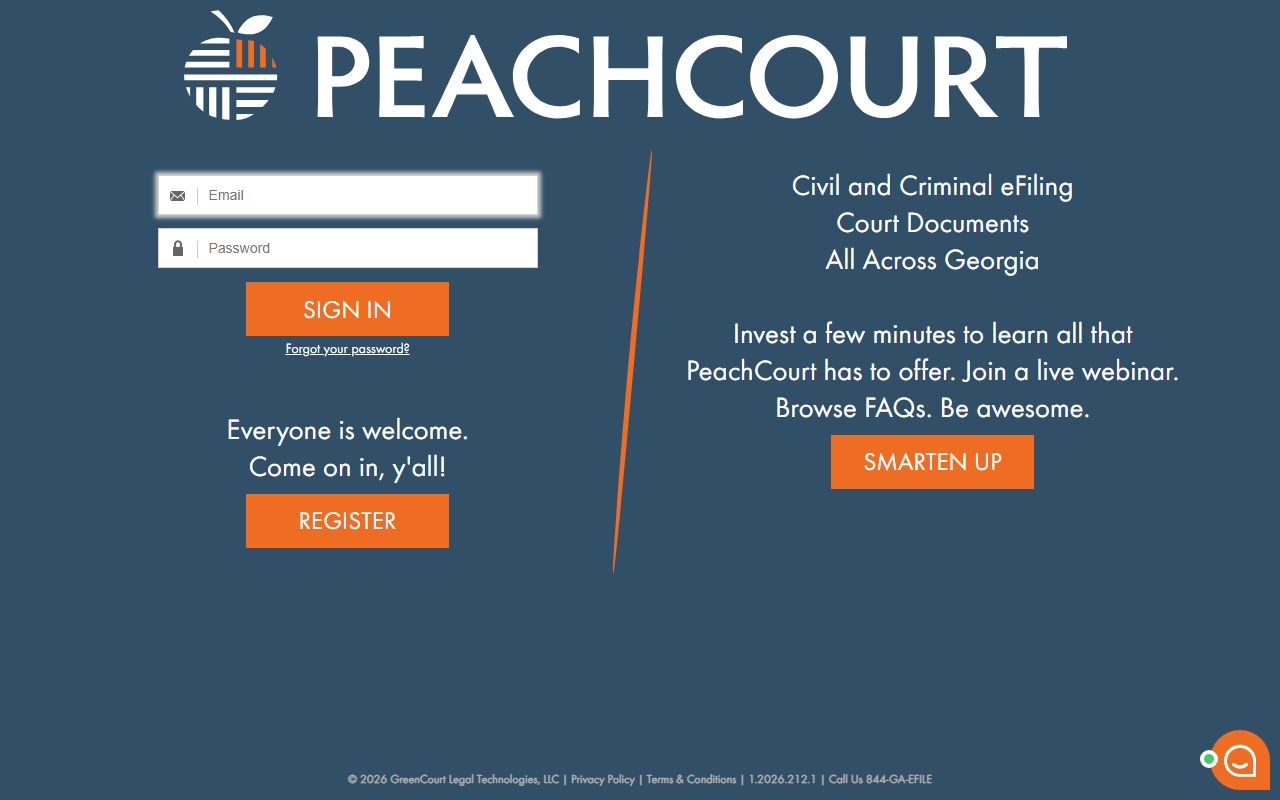
Check whether Long County currently participates in PeachCourt. If it does, you may be able to file documents or access case records online without making the drive to Ludowici.
Filing a Dissolution Case in Long County
To file for dissolution of marriage in Long County, at least one spouse must have lived in Georgia for six months before filing. This residency rule applies statewide. The petition goes to the Superior Court Clerk in the county where the defendant lives. If the defendant is out of state, you may file in the county where you live, which can be Long County if that is your residence.
Georgia provides 13 legal grounds for dissolution. The most widely used is that the marriage is irretrievably broken, a no-fault ground that does not require proof of wrongdoing by either party. This ground simplifies the process for most couples. Other grounds include adultery, willful desertion for at least one year, cruel treatment, and habitual intoxication. The full list is at Georgia Code Section 19-5-3.
Once you file and serve the other party, a 30-day waiting period runs. The judge cannot sign the final decree until those 30 days end. Uncontested cases where both parties agree on all issues can wrap up soon after the waiting period. Contested cases take more time. Long County is served by the Atlantic Judicial Circuit of Georgia. The circuit judge assigned to your case will hold hearings at the Long County Courthouse in Ludowici as needed.
Georgia court forms for dissolution are available at georgiacourts.gov. Bring completed forms and your filing fee to the clerk's office. Staff can confirm which forms apply to your situation.
What Is in a Dissolution File
A dissolution of marriage case file in Long County contains all the papers the court received from the time the case was opened until it closed. The petition starts the file. It names both parties, states the grounds for dissolution, and tells the court what relief is requested. The answer, if one is filed, is the other party's formal response. Temporary orders covering support, custody, or use of property may appear in the file if the court issued any during the pendency of the case.
The final decree is the key document. It is the judge's written order that ends the marriage and sets all the terms. Property division, debt allocation, child custody and visitation schedules if children are involved, child support, and alimony if ordered all appear in the final decree. The clerk keeps the original. You can get certified copies for a fee.
Long County dissolution records are public. Anyone can request them. The clerk may limit access to certain details about minor children, but most case documents are open to the public. Bring your ID when you visit in person, and ask the clerk what the current copy fees are before your trip.
Historical Records and Georgia Archives
For older Long County dissolution records, the Georgia Archives maintains a statewide index covering 1965 to 1971 and 1973 to 1999. This index can confirm a dissolution took place and identify the county of filing. It does not contain full case files, but it gives you the information you need to contact the right clerk's office. Visit georgiaarchives.org to search the index.
The DPH verification service mentioned above covers 1952 through 1996. For records that fall outside both of those windows, the only path is a direct request to the Long County Superior Court Clerk. The clerk can advise on the oldest records they hold and what format they are in.
Legal Help in Long County
Georgia Legal Services Program offers free legal help to lower-income residents of Long County. Their website is glsp.org. Georgia Legal Aid provides online self-help tools and guides at georgialegalaid.org. These resources are particularly useful if you want to handle your own dissolution case but are not sure how to fill out the forms or what to expect in court.
The Georgia Bar's lawyer referral service at gabar.org, reachable at 1-800-334-6865, can connect you with a family law attorney near Long County. Many attorneys in the Savannah or Hinesville area handle cases in neighboring counties, including Long County. An initial consultation can help you decide whether to hire an attorney or proceed on your own.
Cities in Long County
Ludowici is the county seat of Long County with a population of roughly 1,600. No city in Long County meets the population threshold for a dedicated records page. All dissolution of marriage cases from communities across Long County are filed at the Superior Court Clerk's office in Ludowici.
Nearby Counties
The counties that border or are near Long County are listed below. Each has its own Superior Court Clerk and handles dissolution cases for residents in that county.
McIntosh County also borders Long County to the southeast.