
Search McDuffie County Dissolution of Marriage Records
Dissolution of marriage records in McDuffie County are filed with the Superior Court Clerk in Thomson and are open to the public under Georgia law. Whether you need a certified copy of a final decree, want to check if a case was filed, or are looking into older records for legal or personal reasons, the clerk's office in Thomson is your starting point. This page covers where to look, how to make a request, what statewide tools are available, and where to find legal help in this part of Georgia.
McDuffie County Quick Facts
McDuffie County Superior Court Clerk
The Superior Court Clerk is the official keeper of all dissolution of marriage records in McDuffie County. The office is located inside the McDuffie County Courthouse in Thomson, and staff can help you locate case files, verify case status, and provide certified copies of final decrees or other documents. If you plan to send a request by mail, use the PO Box address rather than the physical courthouse address to make sure your correspondence reaches the right department.
| Office | McDuffie County Superior Court Clerk |
|---|---|
| Address | 349 Main Street, Suite 102, Thomson, GA 30824 |
| Mailing Address | PO Box 158, Thomson, GA 30824 |
| Phone | (706) 595-2100 |
| Hours | Monday through Friday, 8:30 AM to 5:00 PM |
| Website | Find My Clerk Directory |
When you call or visit, have the full names of both parties and a rough idea of the filing year. That makes it much easier for staff to pull the right record, particularly for older paper-based files that have not been digitized.
How to Search McDuffie County Dissolution of Marriage Records
McDuffie County does not maintain its own public online case search portal. Most searches will require you to contact the clerk's office in person or by phone. That said, a handful of statewide tools are worth checking first.
The Georgia Superior Court Clerks' Cooperative Authority (GSCCCA) runs a statewide index of civil court filings and recorded documents. Coverage of dissolution cases varies by county and by year, but it is a useful first stop. If the case you need shows up in the GSCCCA system, you may be able to request a certified copy through their online eCertification portal at ecert.gsccca.org without making a trip to Thomson.
The state court portal at georgiacourts.gov links to court resources and can point you to the correct court if you are unsure where a case was filed. PeachCourt, Georgia's eFiling platform, also allows some case status lookups for cases filed in participating courts. If the McDuffie County case you are searching was filed in recent years, PeachCourt may have an entry for it.
For older or hard-to-find cases, the best option is a direct visit to the clerk's office at 349 Main Street. Bring a valid photo ID and be ready to pay a copy fee for any certified documents you need. Staff can also direct you if records from a particular period have been stored offsite or archived in a different format.
The Superior Court Clerks of Georgia website shown below is the statewide directory for all 159 county clerk offices, including McDuffie County. It is a reliable way to verify contact details before you reach out.
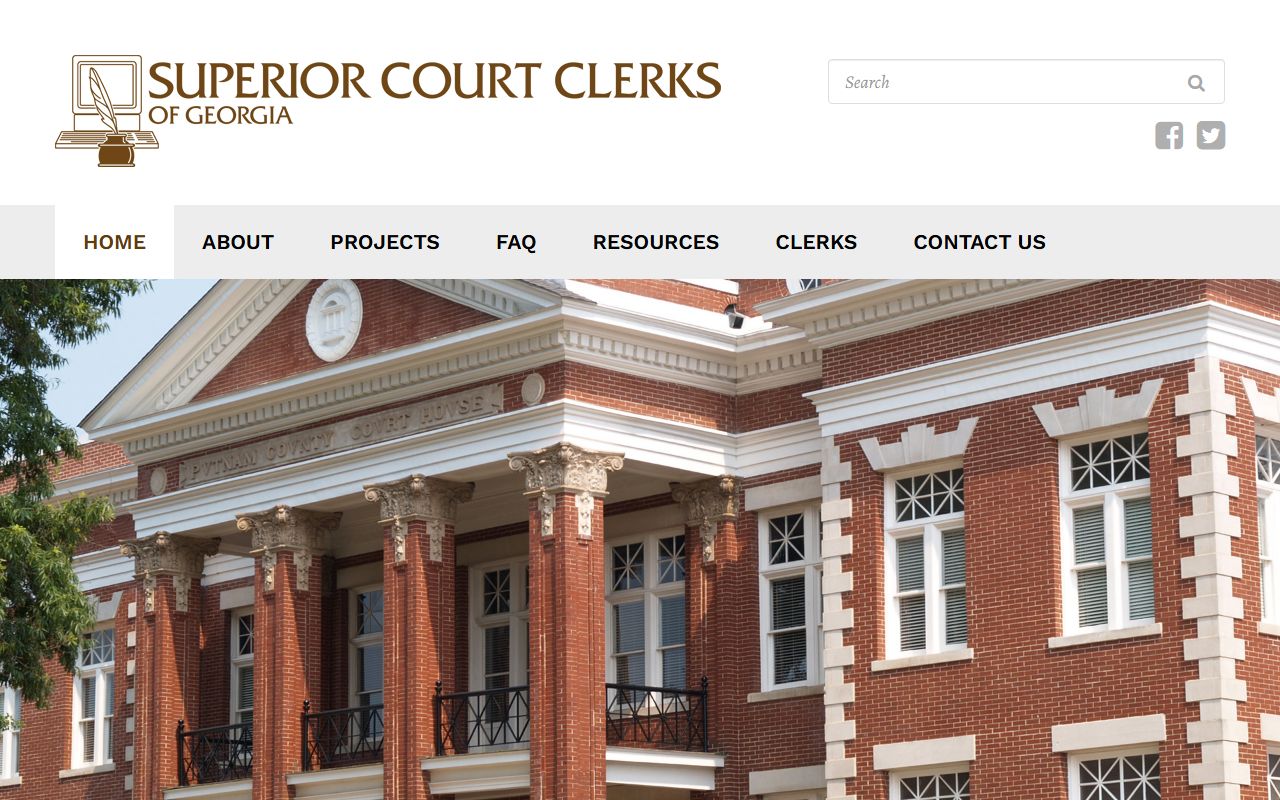
The directory is kept current and lists the physical address, mailing address, and phone number for each clerk's office in Georgia.
Dissolution of Marriage Process in McDuffie County
To file for dissolution of marriage in McDuffie County, at least one spouse must have been a Georgia resident for a minimum of six months before filing. That requirement is set by state law under O.C.G.A. § 19-5-2. If neither spouse meets that residency rule, the McDuffie County Superior Court cannot hear the case.
Georgia law lists 13 grounds for dissolution of marriage under O.C.G.A. § 19-5-3. The most common one used today is that the marriage is irretrievably broken. This is a no-fault ground, meaning you do not have to prove fault by either party. Other grounds are available under the statute but are rarely used in practice. Most straightforward cases in McDuffie County use the no-fault option.
Georgia law requires a 30-day waiting period after the other party is served before a final hearing can take place. This applies even if both spouses agree on everything. The court will not sign a final decree until that window closes. For contested cases involving property division, custody disputes, or support disagreements, the timeline is often much longer and depends on the court's schedule and the complexity of the issues.
The general steps for filing in McDuffie County follow this order:
- File the petition and required documents at the Superior Court Clerk's office
- Pay the filing fee at the time of submission
- Serve the other spouse through the sheriff's office or a private process server
- Wait the required 30 days after service is complete
- Appear at the final hearing for the court to issue the decree
The clerk's office can tell you which forms are accepted locally and whether McDuffie County has any specific requirements beyond what state law sets out.
What Dissolution of Marriage Records Contain
A dissolution of marriage case file held by the McDuffie County Superior Court Clerk can include a range of documents. Simple uncontested cases may have only a few pages, while complex contested cases can contain hundreds of pages of motions, responses, and supporting materials.
Documents commonly found in a dissolution case file include:
- The original petition for dissolution of marriage
- Proof of service showing the other party was properly notified
- Any answer or counterclaim filed by the respondent
- Settlement or separation agreements signed by both parties
- Temporary orders for custody, support, or property use
- The final decree of dissolution of marriage
- Post-decree orders for modifications to custody or support
Certified copies of the final decree are the most requested document. Courts, financial institutions, and government agencies often require a certified copy when you update records, change a name, or handle estate matters. The clerk can certify individual documents from the case file, not just the final decree. Records are public under Georgia's Open Records Act, though sealed records or filings involving minor children may have access restrictions imposed by the court.
State Divorce Verification Through DPH Vital Records
The Georgia Department of Public Health (DPH) Vital Records office maintains a limited set of divorce verification records at the state level. It is worth knowing exactly what that office can and cannot do before you contact them.
DPH can only confirm whether a divorce took place in Georgia for cases filed between 1952 and 1996. They do not hold the actual court file or certified copies of decrees. What they issue is a verification letter confirming the event occurred, which can satisfy certain legal or administrative purposes. For cases outside that date range, or if you need the actual court documents, you must go to the Superior Court Clerk in the county where the case was filed, which for most McDuffie County residents means the Thomson courthouse.
DPH Vital Records is located at 1680 Phoenix Blvd Suite 100, Atlanta, GA 30349. They can be reached at (404) 657-2700, Monday through Friday from 8 AM to 5 PM. A search fee applies, and requests require Form 3917. Full details are at dph.georgia.gov/VitalRecords.
The Georgia Courts portal shown below connects users to court information and case management tools across the state. It is a useful reference when you are trying to confirm which court handled a case or need background on the Georgia court structure.

The portal also links to eFiling systems and individual court websites that may have additional search tools for more recently filed cases.
Legal Help for Dissolution of Marriage in McDuffie County
Several organizations offer legal assistance in McDuffie County if you need guidance on a dissolution case. Getting advice early can save time and prevent costly mistakes later on.
Legal Services Georgia provides free civil legal help to qualifying low-income residents. Family law matters, including dissolution of marriage, custody, and support, are within their scope. McDuffie County is part of their service area. Contact them directly to check eligibility and get connected with an attorney or paralegal who can help.
Georgia Legal Aid offers plain-language guides and self-help tools online for people who want to handle an uncontested case on their own. The site covers the steps involved, the forms needed, and what to expect at each stage of the process. It is particularly useful if your situation is straightforward and both parties agree on all terms.
The State Bar of Georgia runs a lawyer referral service at 1-800-334-6865. Attorneys in the Thomson area know local court practices and can advise you on anything specific to McDuffie County that may not be obvious from state statutes alone. Even a one-hour consultation can clarify a lot.
The Georgia Archives in Morrow holds a statewide divorce index on microfiche covering cases from 1965 to 1971 and 1973 to 1999. If you are looking for an older case and the clerk's office records are incomplete or hard to access, the Archives may have an index entry that helps you confirm whether and where a case was filed.
Cities in McDuffie County
Thomson is the county seat of McDuffie County and the city where the courthouse is located. No cities in McDuffie County currently meet the population threshold for a dedicated records page. Thomson residents and others in the county file dissolution of marriage cases at the McDuffie County Superior Court Clerk's office at 349 Main Street, Suite 102.
Nearby Counties
The counties that border McDuffie County each have their own Superior Court Clerk responsible for dissolution of marriage records filed in those jurisdictions.