
Access Bulloch County Dissolution of Marriage Records
Dissolution of marriage records in Bulloch County are filed with the Superior Court Clerk in Statesboro, Georgia. Once the final decree is entered, these records are open to the public. You can search them at the Statesboro courthouse or through various Georgia state online tools. This page covers how to find and access dissolution records, the filing process under Georgia law, what case files contain, state verification options, and legal help resources available in Bulloch County.
Bulloch County Quick Facts
Bulloch County Superior Court Clerk
The Bulloch County Superior Court Clerk in Statesboro accepts and maintains all dissolution of marriage filings in the county. The clerk's office keeps the case index, stores final decrees, and issues certified copies on request. Staff will search records by party name or case number. They can tell you what documents are in a file and what copy fees apply, but they are not able to give legal advice.
| Office | Bulloch County Superior Court Clerk |
|---|---|
| Address | 20 Siebald Street, Statesboro, GA 30458 |
| Mailing | PO Box 46, Statesboro, GA 30459 |
| Phone | (912) 764-9009 |
| Hours | Monday through Friday, 8:30 AM to 5:00 PM |
| Website | Not available |
The courthouse is at 20 Siebald Street in Statesboro. Bring a valid photo ID when you visit. Have the full legal names of both parties so the clerk can search the index. Older records stored in paper form are held at the courthouse. There is no dedicated online portal for Bulloch County records at this time. Mail requests are possible, but call first to ask what to include and how to pay for copies before sending anything.
The GSCCCA runs a statewide portal that covers dissolution and civil records across Georgia counties. You can access it at gsccca.org. The portal's eCertification feature lets you request certified copies of recorded documents online without a courthouse visit.
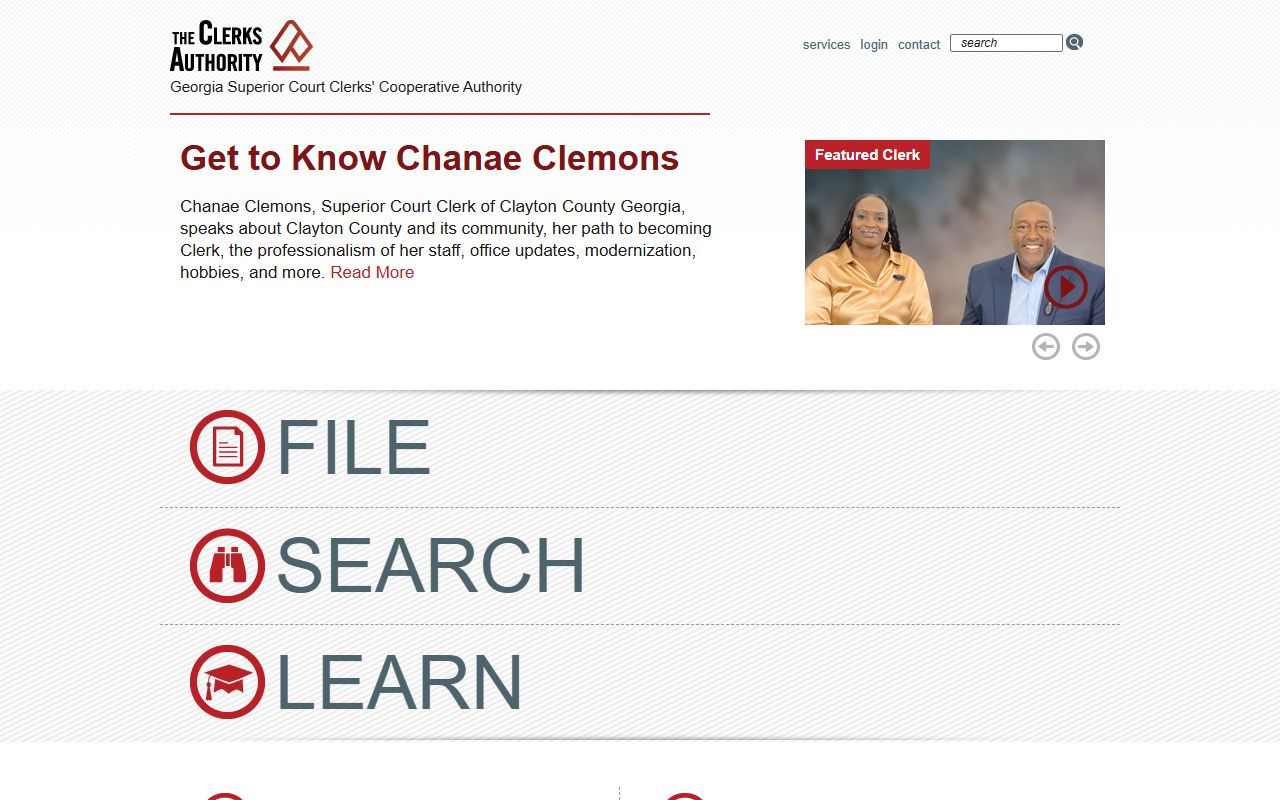
GSCCCA connects to clerk offices across Georgia and provides a central point for searching and requesting certified dissolution records.
How to Search Bulloch County Dissolution Records
The clerk's office at 20 Siebald Street in Statesboro is the primary source for dissolution of marriage records in Bulloch County. Visit with a valid photo ID and the names of both parties in the case. Staff will search the index and let you view or copy the file. Copy fees apply for any documents you take with you. Call ahead to confirm current fees before your visit.
Online, Georgia Courts at georgiacourts.gov provides statewide court access and case data for many Georgia jurisdictions. PeachCourt at peachcourt.com gives public access to civil filings in participating counties. Both tools are worth checking before making the trip to Statesboro.
The GSCCCA eCertification system at ecert.gsccca.org allows online certified copy requests for recorded documents. Re:SearchGA at researchga.tylerhost.net covers about 25 Georgia counties and may include Bulloch County filings. For older historical materials, the Georgia Archives at georgiaarchives.org is open Tuesday through Saturday from 9 AM to 4 PM and can be reached at (678) 364-3710.
Dissolution of Marriage in Bulloch County
Georgia requires that at least one spouse has been a resident of the state for six months before filing a dissolution of marriage petition. This rule is established in O.C.G.A. § 19-5-2. You file the petition with the Bulloch County Superior Court Clerk in Statesboro. After filing, you must serve the other spouse with the petition and summons in accordance with Georgia law.
Once service is completed, the court cannot hold a final hearing for at least 30 days. That waiting period is required by O.C.G.A. § 19-5-3. If both parties have agreed on all terms, the case can often be resolved fairly quickly after the wait period ends. In contested cases involving property, children, or support, the court must resolve those issues before the final decree can be entered.
Georgia law recognizes 13 grounds for dissolution. Most filings use the no-fault ground, that the marriage is "irretrievably broken." This requires no evidence that either spouse did anything wrong. Once the judge signs the final decree in Bulloch County, the clerk files it and it becomes a public record. Any person may request a copy.
What Dissolution Records Contain
The dissolution of marriage case file in Bulloch County holds the final decree and all documents submitted during the proceedings. The decree sets out every ruling the court made.
- Full legal names of both spouses as listed in the petition
- Date of the marriage and the date the court entered the final dissolution
- Grounds for dissolution as pled in the petition and found by the judge
- Division of marital assets and debts
- Child custody terms, parenting time schedule, and visitation plan if children are in the case
- Child support amount and payment terms
- Alimony or spousal support provisions if the court ordered them
The petition, summons, proof of service, and all motions and orders filed during the case are in the public file. If the parties submitted a consent agreement or settlement before the final hearing, that document is part of the record too. Financial affidavits and certain exhibits may be restricted by court order, but the decree itself is open to public inspection under Georgia law.
Georgia State Dissolution Verifications
The Georgia Department of Public Health maintains dissolution of marriage verifications at the state level for cases finalized between 1952 and 1996 only. These are not court decrees. They confirm that a dissolution occurred but do not include the full text or terms of the order. For records outside that range, or when you need the certified decree itself, the Bulloch County Superior Court Clerk is the right office.
State verifications cost $10. You submit Form 3917 to DPH at 1680 Phoenix Blvd Suite 100, Atlanta, GA 30349. Phone is (404) 657-2700. Office hours are Monday through Friday, 8 AM to 5 PM. Full request details are at dph.georgia.gov/VitalRecords.
Check with whoever is requesting the record before you order. Courts, lenders, and government offices often require a certified copy of the actual court decree from the county clerk, not a DPH verification. Order the right document the first time to avoid delays.
Legal Help in Bulloch County
Legal Services Georgia serves income-eligible residents in Bulloch County on civil matters including dissolution of marriage. Their website is glsp.org. Georgia Legal Aid at georgialegalaid.org has free guides, form downloads, and contacts for legal help with family law cases across the state.
The State Bar of Georgia operates a lawyer referral service at gabar.org or by calling 1-800-334-6865. The referral line connects callers with licensed Georgia attorneys practicing family law. Initial consultations through the program are typically offered at a low rate. Statesboro has private family law attorneys as well. If your case involves children, property, or any contested issue, speaking with a lawyer before filing is a sound step.
Georgia statutes governing dissolution of marriage are available online at codes.findlaw.com. The full text of Title 19, Chapter 5 covers residency, grounds, procedure, and final decrees.
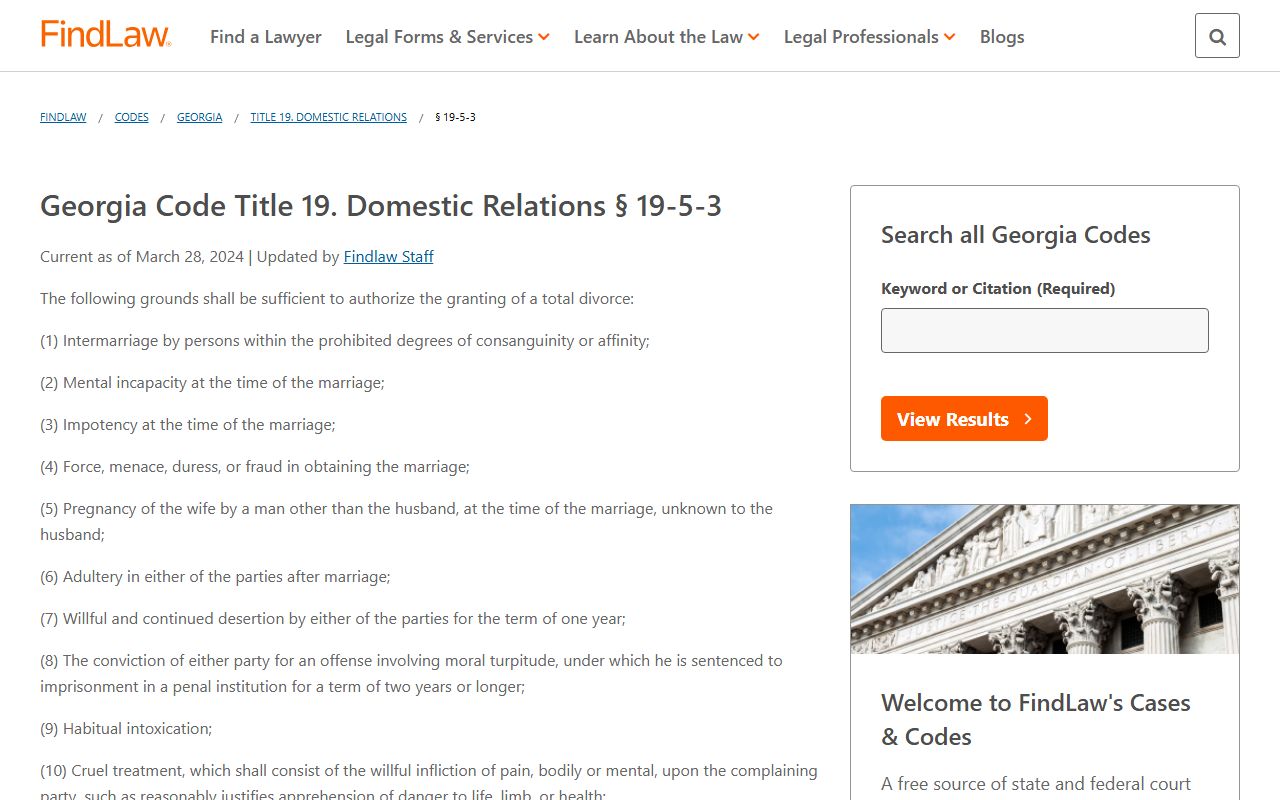
Reading the statute before you file helps you understand what the law requires and what the court will look at when deciding your case.
Cities in Bulloch County
Statesboro is the county seat of Bulloch County and home to the Superior Court Clerk that handles all dissolution of marriage filings. It is the only city in Bulloch County that qualifies for a dedicated records page on this site.
Nearby Counties
Counties adjacent to Bulloch each have their own Superior Court Clerk for dissolution of marriage records. Use the links below to find information for neighboring counties.