
Find Dissolution of Marriage Records in Morgan County
Dissolution of marriage records in Morgan County are maintained by the Superior Court Clerk in Madison, the county seat, and are open to the public under Georgia law. Whether you need a certified copy of a final decree, want to confirm a case was filed, or are researching older records for a legal or personal matter, the clerk's office in Madison is where you begin. This page covers how to search, what statewide tools to check, how the filing process works, and where to get legal help in this part of northeast Georgia.
Morgan County Quick Facts
Morgan County Superior Court Clerk
The Superior Court Clerk in Madison is the official custodian of all dissolution of marriage records for Morgan County. The office is at 384 Hancock Street inside the Morgan County Courthouse. Staff handle walk-in requests, phone inquiries, and mail submissions during regular business hours. If you plan to submit a request by mail, use the PO Box rather than the street address to ensure your documents and payment reach the correct department.
| Office | Morgan County Superior Court Clerk |
|---|---|
| Address | 384 Hancock Street, Madison, GA 30650 |
| Mailing Address | PO Box 400, Madison, GA 30650 |
| Phone | (706) 342-3605 |
| Hours | Monday through Friday, 8:30 AM to 5:00 PM |
| Website | Find My Clerk Directory |
Before calling or visiting, have the full names of both parties and a rough estimate of the filing year. That makes it much faster for staff to pull the right record, especially for older cases that may not yet be in a digital index.
How to Search Morgan County Dissolution of Marriage Records
Morgan County does not currently operate its own public online case search portal. Most searches require a direct phone call or in-person visit to the Madison courthouse. A few statewide tools are worth checking first, as they can sometimes surface case details without a trip to the clerk's office.
The Georgia Superior Court Clerks' Cooperative Authority (GSCCCA) maintains a statewide index of civil filings and recorded documents. Coverage varies by county and year, but it is a reliable first step. If the Morgan County case you are looking for appears in the GSCCCA index, you can request a certified copy through the online eCertification portal at ecert.gsccca.org without visiting Madison in person.
The Georgia Courts portal links to court resources and case management tools across the state. It does not hold Morgan County records directly but can point you toward the right court or provide case numbers from related proceedings. PeachCourt, Georgia's eFiling platform, supports case status lookups for courts that participate in the system. Cases filed in more recent years may appear there.
For records that predate online systems, or when statewide tools do not return a result, the clerk's office in Madison is the most reliable option. Bring a photo ID and be ready to pay a fee for certified copies. Staff can tell you if records from a specific time period are stored off site or require extra time to retrieve.
The Superior Court Clerks' Association of Georgia directory is a useful reference for confirming current contact details before you reach out to any county clerk, including Morgan County.
The Georgia DPH Vital Records about page shown below explains what the state holds at the central level, including the scope of divorce verification records that DPH can provide for cases filed between 1952 and 1996.
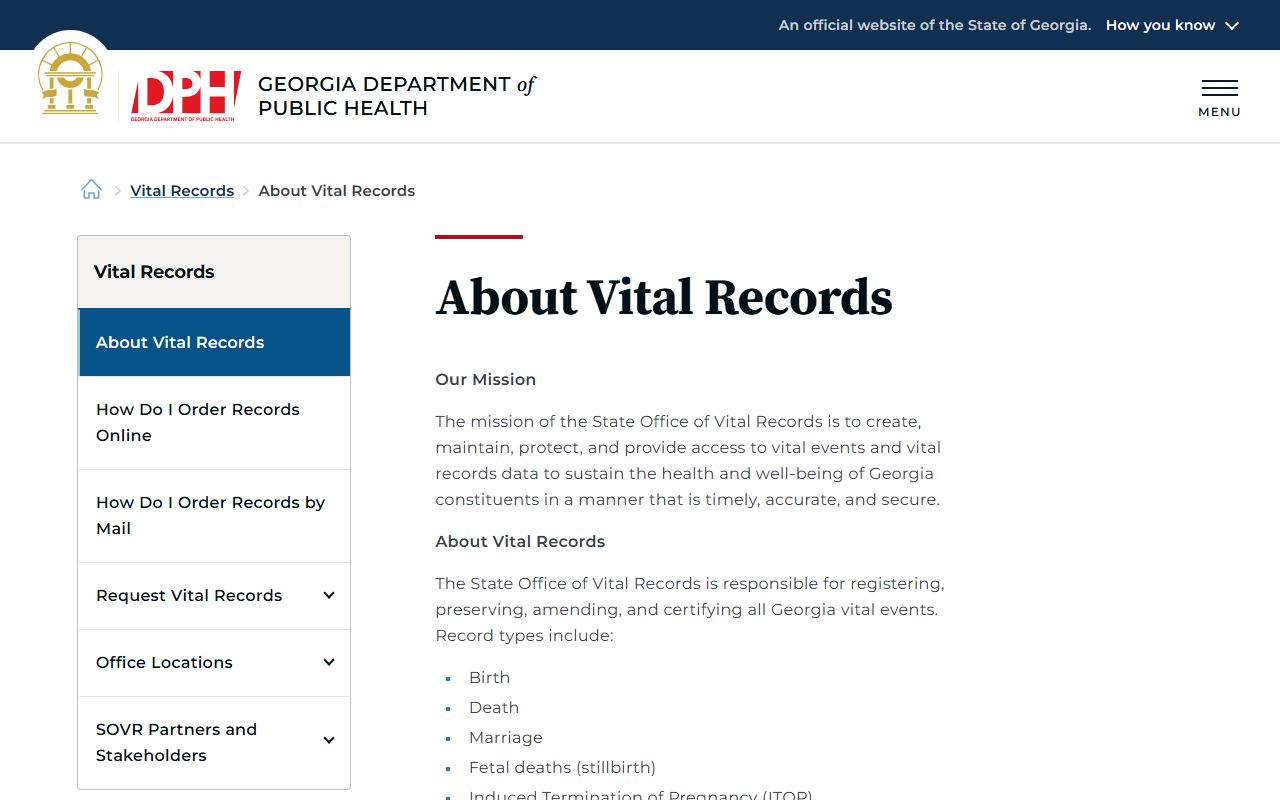
For cases outside that date range, or when actual court documents are needed, the Morgan County Superior Court Clerk in Madison is the right contact rather than the state DPH office.
Dissolution of Marriage Process in Morgan County
Filing for dissolution of marriage in Morgan County requires that at least one spouse has lived in Georgia for a minimum of six months before submitting the petition. That residency rule is set by O.C.G.A. § 19-5-2. If neither party meets it, the Morgan County Superior Court cannot take jurisdiction.
Georgia law provides 13 grounds for dissolution of marriage under O.C.G.A. § 19-5-3. The no-fault ground, that the marriage is irretrievably broken, is by far the most common. No proof of wrongdoing is required for this ground. The other 12 grounds are fault-based and are used rarely in practice. For most straightforward cases in Morgan County, especially uncontested ones, the no-fault route is the standard approach.
Once the petition is filed and served on the other party, Georgia mandates a 30-day waiting period before the court can hold a final hearing. This applies even when both spouses have agreed on every issue. The judge cannot sign the final decree until that window closes. Contested cases, those involving disputes over property, custody of children, or alimony, can take much longer. They may stretch to many months or more, depending on the issues and the court's schedule.
The general steps for filing a dissolution of marriage in Morgan County are:
- File the petition and supporting documents with the Superior Court Clerk
- Pay the filing fee when you submit the paperwork
- Have the other party served through the sheriff's office or a process server
- Wait the required 30 days after service is completed
- Appear at the final hearing for the court to enter the dissolution decree
Contact the clerk's office to confirm which forms Morgan County requires locally and whether any court-specific rules apply beyond what state law sets out.
What Dissolution of Marriage Records Contain
Case files held by the Morgan County Superior Court Clerk reflect the full paper record of a dissolution proceeding. Simple agreed cases are often short. Contested matters can be lengthy, with many filings and court orders.
Common documents in a dissolution of marriage case file include:
- The original petition for dissolution of marriage
- Proof of service showing proper notice was given to the other party
- Any answer or counterclaim submitted by the respondent
- Settlement or consent agreements on property, custody, and support
- Temporary orders entered while the case was active
- The final decree of dissolution of marriage
- Post-decree orders modifying custody, support, or other terms
Certified copies of the final decree are the most frequently requested document. Courts, banks, employers, and government agencies commonly ask for one when processing name changes or updating records tied to the dissolution. The clerk can certify individual documents from the file as needed, not just the final decree. Georgia's Open Records Act makes court records generally public, with limited exceptions for sealed filings or records involving minor children where the court has restricted access.
State Divorce Verification Through DPH Vital Records
The Georgia Department of Public Health (DPH) Vital Records office maintains a limited set of state-level divorce verification records. Knowing the scope of what they hold will help you decide whether to contact them or go directly to the county clerk.
DPH can only confirm that a divorce occurred in Georgia for cases filed between 1952 and 1996. They do not hold the actual court files, certified copies of decrees, or any case documents. What they issue is a verification letter. For cases outside that date range, or when you need the actual court record, contact the Superior Court Clerk in the county where the case was filed. For Morgan County cases, that is the clerk's office in Madison.
DPH Vital Records is at 1680 Phoenix Blvd Suite 100, Atlanta, GA 30349. Phone: (404) 657-2700, Monday through Friday from 8 AM to 5 PM. Form 3917 and a search fee are required. See dph.georgia.gov/VitalRecords for full details.
The Georgia Courts portal shown below provides access to court resources statewide, including links to case management systems, court websites, and eFiling platforms used across Georgia's 159 counties.
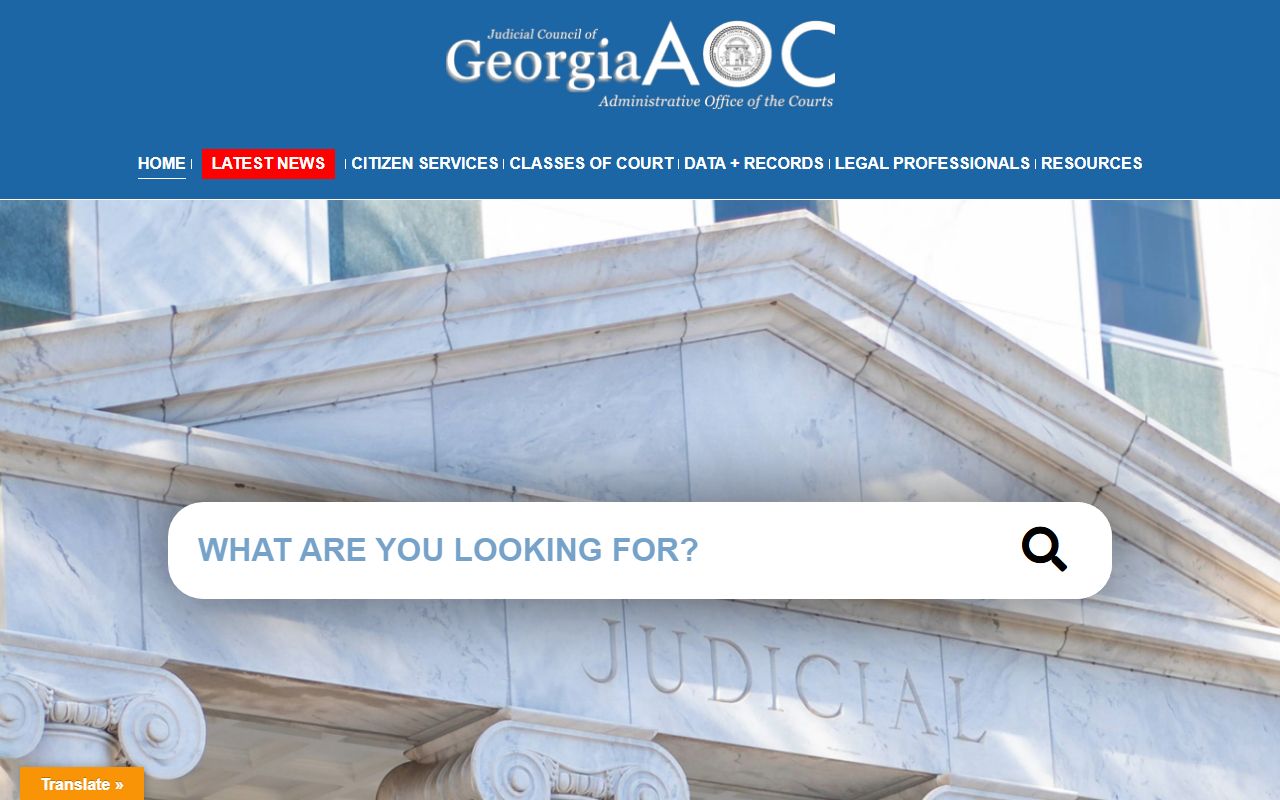
The portal is a useful starting point when you are not sure which court handled a case or want to understand how the Georgia court system is organized before you contact the Morgan County clerk.
Legal Help for Dissolution of Marriage in Morgan County
If you need legal assistance with a dissolution of marriage case in Morgan County, several resources serve this area of Georgia. Getting the right help early often leads to a faster and smoother process.
Legal Services Georgia provides free civil legal assistance to qualifying low-income residents. Morgan County is within their service area. They handle family law matters including dissolution of marriage, child custody, and support. Contact them directly to check whether you qualify and to connect with someone who can help with your situation.
Georgia Legal Aid offers self-help guides and resources online for people handling their own cases. The materials on dissolution of marriage walk through the process in plain language, from how to complete the initial petition to what to expect at the final hearing. This is a strong option for people dealing with a straightforward uncontested case and who need clear step-by-step guidance.
The State Bar of Georgia operates a lawyer referral service at 1-800-334-6865. Attorneys in the Madison area know the Morgan County court system and can advise you on local practices, filing procedures, and anything specific to cases handled at the Madison courthouse. A short consultation can clarify a lot.
The Georgia Archives in Morrow holds a statewide microfiche divorce index for cases filed between 1965 and 1971 and from 1973 to 1999. If you are looking for an older Morgan County dissolution case and the clerk's records are hard to access or incomplete, the Archives index can help you confirm filing details and identify where the original case file is kept.
Cities in Morgan County
Madison is the county seat of Morgan County and the city where dissolution of marriage cases are filed and maintained. No cities in Morgan County currently exceed the population threshold for a dedicated records page on this site. Residents of Madison and all other communities in Morgan County file and access dissolution of marriage records at the Superior Court Clerk's office at 384 Hancock Street. Nearby qualifying city Athens is in Clarke County to the northeast and has its own records page.
Nearby Counties
Morgan County borders several counties in northeast and central Georgia, each with a Superior Court Clerk responsible for dissolution of marriage records filed in their own jurisdiction.