
Search Newton County Dissolution Of Marriage Records
Dissolution of marriage records in Newton County are held by the Superior Court Clerk in Covington and are available to the public under Georgia law. This page covers how to reach the clerk, how to search for a case, what records the case file typically includes, and what legal resources are available to Newton County residents. Covington is the county seat, and all filings go through the clerk's office at the Newton County Courthouse on Usher Street.
Newton County Quick Facts
Newton County Superior Court Clerk
The Superior Court Clerk in Covington is the official custodian of all dissolution of marriage records filed in Newton County. The office is at Suite 148 of the Newton County Courthouse on Usher Street. There is no public online case search system for Newton County dissolution records, so you will need to contact the clerk directly by phone, mail, or in-person visit to look up a case or request copies. Newton County has grown significantly in recent years as part of the Atlanta metro area, and the clerk handles a substantial case volume.
| Office | Newton County Superior Court Clerk |
|---|---|
| Address | 1132 Usher Street, Suite 148, Covington, GA 30014 |
| Mailing Address | PO Box 158, Covington, GA 30015 |
| Phone | (770) 784-2055 |
| Hours | Monday through Friday, 8:30 AM to 5:00 PM |
| Directory | Find My Clerk |
When contacting the office, have the full names of both parties and an approximate year of the filing ready. For older records, the file may be in paper format rather than a digital system. Call ahead for large requests or if you are looking for records from many years ago. Mail requests should include both parties' names, the case year, your return address, and payment for copies in the form of a check or money order.
How to Search Newton County Dissolution Records
Newton County does not offer a standalone public portal for dissolution of marriage case searches. Direct contact with the clerk's office in Covington is the primary way to locate a record. However, several statewide digital resources can help supplement your search or provide initial information.
The Georgia Superior Court Clerks' Cooperative Authority (GSCCCA) maintains a statewide index of civil filings across Georgia. Some Newton County dissolution records may be indexed in that system. The GSCCCA can be reached at (404) 327-9058. Their eCertification portal allows online requests for certified copies of documents that have been indexed. Not every case is indexed, so this tool works best as a supplement to a direct call to the Covington clerk's office.
The screenshot below shows the DPH Vital Records information page, which explains what verification records Georgia holds at the state level for dissolution cases filed between 1952 and 1996. This is different from the court records at the Newton County clerk, but it is useful context for understanding what you can get and from where.
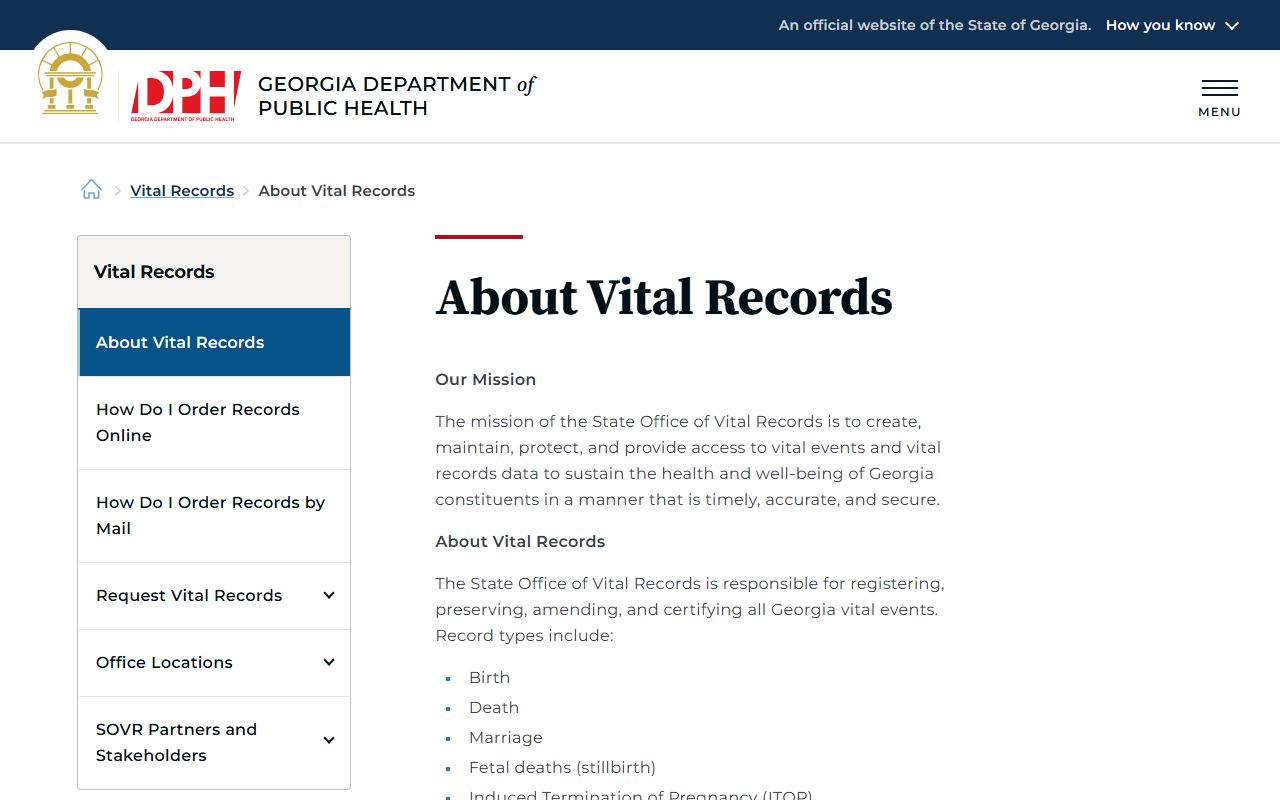
The DPH service is limited to verification letters for cases within that date range. For actual case documents, you must contact the Newton County Superior Court Clerk in Covington.
The GSCCCA portal is shown in the screenshot below. It is the broadest statewide index of Georgia court filings and is a good starting point when you are not sure which county a case was filed in or want to confirm basic case information before contacting the local clerk.
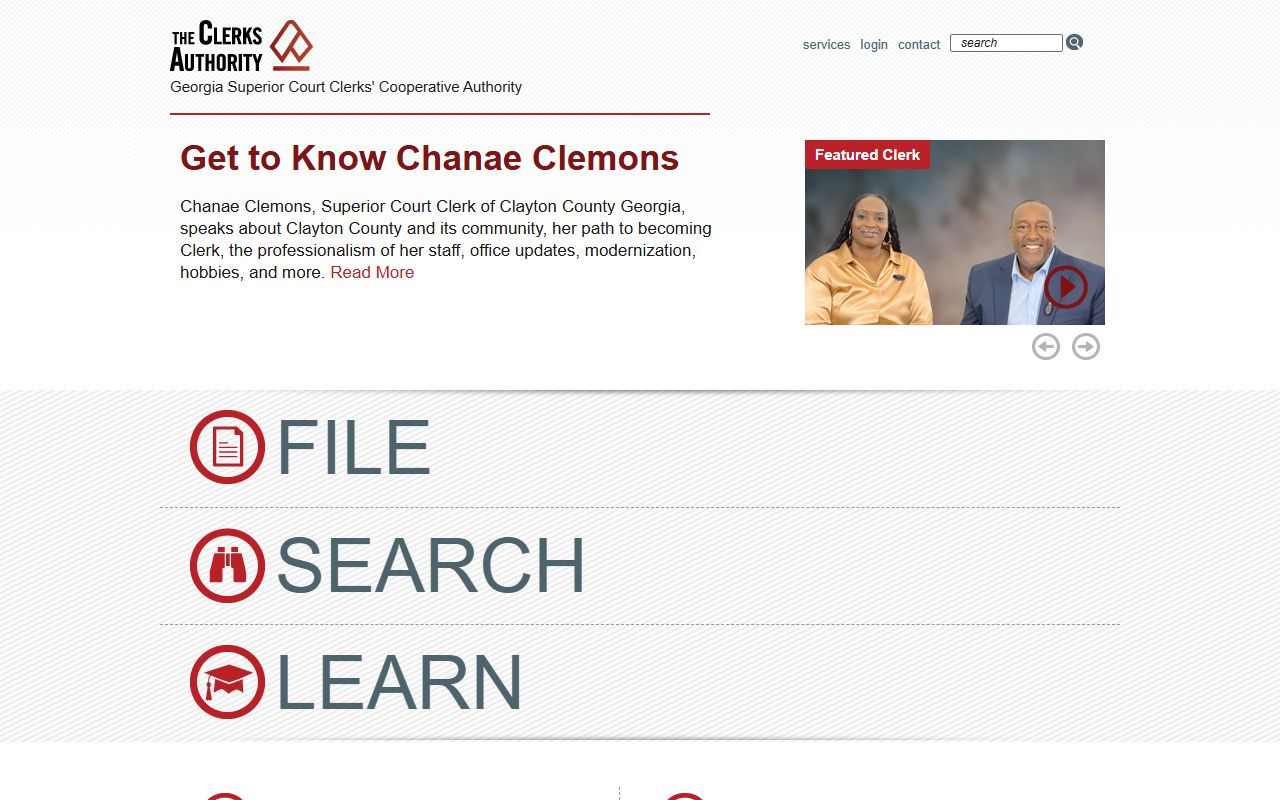
Use the GSCCCA search to confirm whether a Newton County filing appears in the statewide index. From there, you can contact the local clerk to request certified copies or full case file access.
Dissolution of Marriage Law in Georgia
Georgia law governs all dissolution of marriage cases in Newton County, as it does throughout the state. The controlling statutes are in Title 19 of the Official Code of Georgia Annotated. Knowing the basics will help you understand the process whether you are filing, responding to a petition, or just searching for records.
Before the Newton County Superior Court can hear a dissolution case, residency requirements must be met. At least one spouse must have lived in Georgia for six months or more before the petition is filed. This is required by statute and cannot be waived by the court. If neither party meets the residency requirement, the case cannot proceed in Newton County.
Georgia has 13 grounds for dissolution of marriage under O.C.G.A. § 19-5-3. Most cases use the no-fault ground that the marriage is irretrievably broken. This requires no showing of fault by either party. Both spouses can agree on this ground and move forward without proving any wrongdoing. The other 12 grounds in the statute are fault-based. They exist in the law but are rarely used in modern practice.
Once the petition is filed and the respondent is served with process, a mandatory 30-day waiting period begins. The Superior Court cannot hold the final hearing or issue a decree until those 30 days have passed. This is required in every Newton County dissolution case, including uncontested ones where both parties agree. After the waiting period, the court schedules the final hearing. For uncontested cases, resolution often comes quickly after that. For contested matters, it can take much longer depending on the issues.
Newton County has seen growth in filings in recent years as the county's population has expanded. The clerk's office and the Superior Court are accustomed to handling a range of cases, from simple uncontested matters to complex cases involving significant property or custody disputes.
What Dissolution Records in Newton County Contain
The Newton County Superior Court Clerk holds the full case file for every dissolution of marriage action filed in the county. The file contents vary based on how the case proceeded. An uncontested dissolution with no children or significant property will be relatively brief. A contested case with multiple hearings, expert witnesses, or substantial assets can produce a large and detailed record.
Common documents found in Newton County dissolution case files include the following:
- The original petition for dissolution of marriage
- Proof of service on the other party
- Any answer or counterclaim filed by the respondent
- Temporary orders entered during the case
- Settlement or separation agreements
- The final decree of dissolution of marriage
- Post-decree modification orders if any were entered after the final decree
The final decree is the document most often requested. It is the legal proof that the marriage was dissolved and the specific terms under which that happened. Certified copies are required for name changes with the Social Security Administration or DMV, estate planning updates, and many financial account changes. Contact the clerk at (770) 784-2055 to confirm the current fee for certified copies before submitting a request.
All dissolution records in Newton County are public under the Georgia Open Records Act. Any person may ask to see them. Records sealed by court order are an exception and cannot be accessed without a court order removing the seal.
State Divorce Verification Records
The Georgia Department of Public Health maintains divorce verification records for a specific time period. These records are separate from the case files held by the Newton County Superior Court Clerk and serve a different purpose. It helps to know which source to contact depending on what you need.
DPH Vital Records will confirm whether a dissolution occurred in Georgia for cases filed between 1952 and 1996. The confirmation comes in the form of a verification letter. DPH does not hold the actual court record or issue certified copies of decrees. For those, you must go to the Newton County Superior Court Clerk in Covington. For cases outside the 1952 to 1996 window, DPH cannot help.
DPH Vital Records is located at 1680 Phoenix Blvd Suite 100, Atlanta, GA 30349. Phone: (404) 657-2700. Hours: Monday through Friday, 8 AM to 5 PM. Visit dph.georgia.gov/VitalRecords for forms and complete instructions. The Georgia Archives in Morrow holds a statewide dissolution index on microfiche for 1965 to 1971 and 1973 to 1999. This index can be useful for confirming a filing from that era before making a full request to the clerk.
Legal Help for Newton County Residents
Newton County residents have access to statewide legal resources for dissolution of marriage matters. The county is part of the Atlanta metro region, and legal aid and attorney referral services cover this area.
Legal Services Georgia provides free civil legal help to residents who qualify based on income. Dissolution of marriage, child custody, and support are among their core family law areas. Contact them directly to start the intake process and check eligibility. Newton County is within their service region.
Georgia Legal Aid at georgialegalaid.org offers free online guides for every stage of a dissolution case in Georgia. The guides are clear and practical. They are useful for cases where both parties agree and are managing the process without an attorney, which is common in straightforward uncontested matters.
The State Bar of Georgia runs a lawyer referral service at 1-800-334-6865. They can connect you with a licensed Georgia attorney who handles family law in Newton County or the broader metro Atlanta area. An attorney familiar with the Covington courthouse will know the local procedures and how the Superior Court in Newton County handles its docket.
Cities in Newton County
Covington is the county seat of Newton County, with a population of around 14,000. No cities in Newton County meet the population threshold for a dedicated dissolution of marriage records page. Residents of Covington and all other communities in Newton County file at the Superior Court Clerk at 1132 Usher Street, Suite 148, in Covington.
Nearby Counties
Newton County is located in the eastern Atlanta metro area and shares borders with several surrounding counties. Each maintains its own dissolution of marriage records through its Superior Court Clerk.